
Celebrating Black History Month: A Prominent Black Figure in Maritime History.

Updated: Mar 20

Did you know that approximately 18,000–20,000 African American sailors, roughly 16-20% of the Union Navy's enlisted force, served during the Civil War? Black sailors were crucial to the success of the Union during the civil war. One prominent figure that played an important role in Union success was that of Mary Louvestre.
Mary Louvestre was born into slavery in Norfolk, Virginia. She was free as an adult and served as a housekeeper in the household of Confederate engineer Captain Charles Dimmock. Captain Dimmock’s job was to help transform the USS Merrimack into CSS Virginia. This was important because the CSS Virginia was supposed to be a very heavily armored ship, built to break through wooden blockades. At the time, a steam ironclad ship was the first ship of its kind.

Though Mary was working for a Confederate, she was secretly supporting the efforts of the Union. Not much is actually known about Mary, so there’s many different recollections of what she did to assist the Union against the Confederacy. However, it is agreed upon that somehow, someway Louvestre crossed Confederate enemy lines. She made it all the way from Virginia to Washington D.C., where she was able to secure a meeting with Union Secretary of the Navy, Gideon Welles.
With the information that Mary had provided, the Union Navy realized that it needed to quickly complete the USS Monitor, their own ironclad warship, to ensure they were victorious. The USS Monitor countered the Confederate ironclad CSS Virginia.

Thanks to Mary Louvestre’s efforts, the Union was able to confidently fight the CSS Virginia to a draw, preventing the Confederacy from breaking the Union blockade. This was called the Battle of Hampton Roads, the most important naval battle in the Civil War. It redirected the construction of war vessels. Wooden ships were now a thing of the past, and iron would be the new material that ships would be made out of.
Without Mary, the Confederate could have taken control of Fort Monroe and would have been able to receive supplies from Europe. That could have been a big loss for the Union.
Though much of Mary’s history is shrouded in mystery, it is important to remember her for her courage and bravery during the Civil War. Many black Americans such as Mary provided crucial information, manpower, and courage. Without them, the Union may have never won against the confederacy. Black maritime history is crucial because it reveals the vital, often overlooked, role African Americans played in shaping the U.S. as a global economic and military superpower.
As we reflect on stories like Mary Louvestre’s, we’re reminded that Black maritime history is not just about the past, it’s about visibility, recognition, and continuation. The courage, intelligence, and quiet resistance of individuals like Mary helped shape the course of history, even when their names were left out of it.
Today, honoring that legacy means more than remembering. It means creating space for the next generation to see themselves on the water, in leadership, and in maritime careers. When we teach sailing, explore our waterways, and share these stories, we are continuing a legacy that has always been there, just too often overlooked.
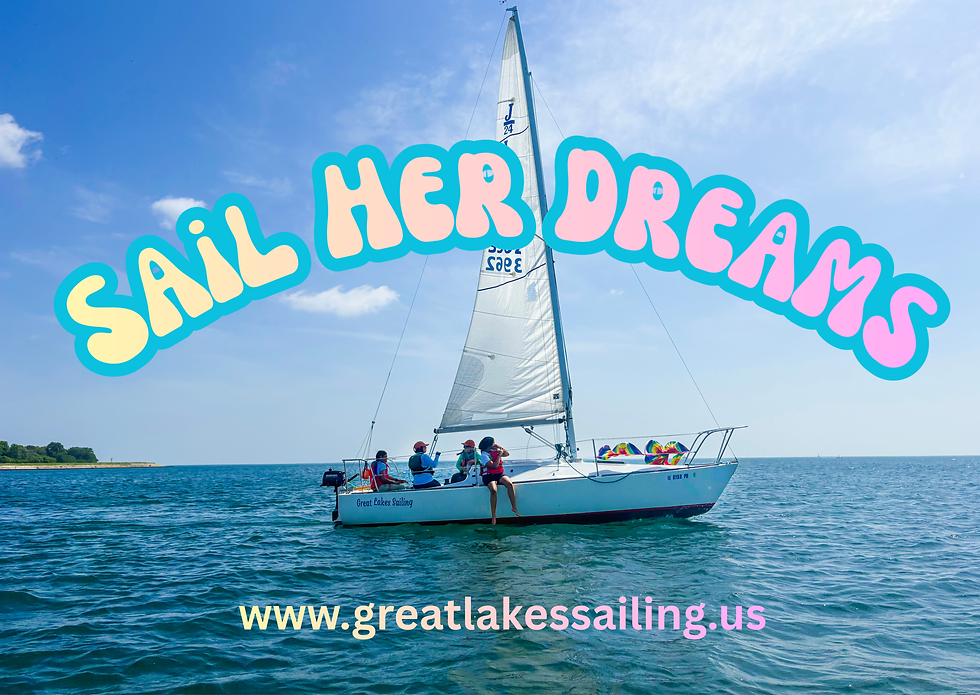
Great Lakes Sailing is a community sailing center focused on sharing sailing with Chicago. Because sailing is predominantly a male sport and hobby, GLS runs a weekly sailing group called Sailing Sisters to help encourage and strengthen access to sailing to women of all ages.
Got a question? Email us at info@greatlakessailing.us or subscribe to our mailing list to stay up to date and receive discounts on sailing lessons.

Comments